
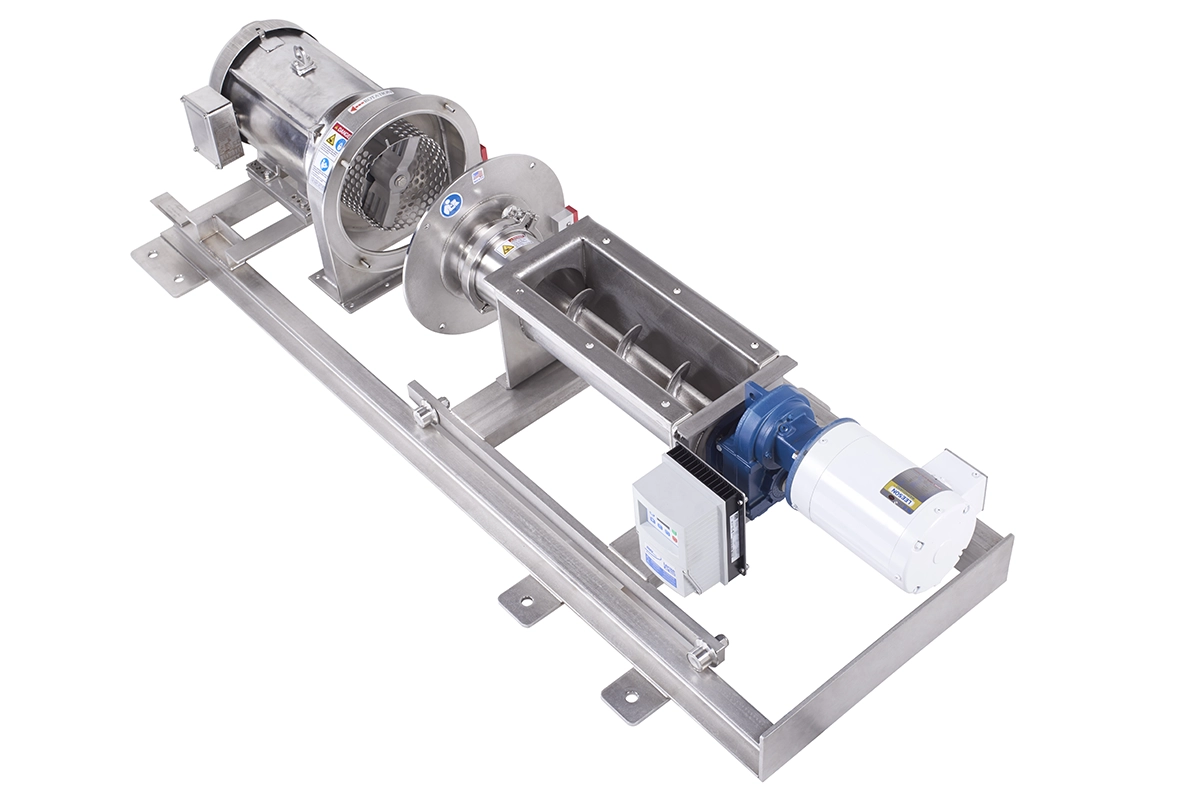
How to Choose the Right Industrial Pureeing Machine for Your Food Process
In food and beverage manufacturing, texture is everything. Whether you’re producing baby food, sauces, soups, purées, beverages, or ingredient bases, consistency determines quality, consumer perception, and product success. Behind every silky purée or uniform slurry is a well-engineered industrial pureeing machine—and choosing the right one directly impacts yield, throughput, and long-term operating costs.
This guide breaks down how industrial pureeing works, the equipment options available, and how to select the best system for your application.
What Is Industrial Pureeing?
Industrial pureeing is the process of reducing solid food products into a smooth, uniform consistency for product development and large-scale manufacturing. Unlike smaller commercial processors, industrial systems must handle:
- High-volume throughput
- Variable raw materials
- Continuous operation
- Uniform particle size distribution
- Strict sanitation standards
- Long-duty cycles
From root vegetables like carrots and sweet potatoes to high-fiber fruits and viscous mixtures, the right equipment ensures consistent, repeatable results at scale.
The 7 Critical Factors That Determine the Right Pureeing System
Choosing the correct machine requires understanding your process from end to end.
1. Product Characteristics
Every ingredient behaves differently—dense items, fibrous produce, high-moisture fruits, frozen materials, and more. Your equipment must match the physical challenge.
2. Throughput Requirements
Determine your production volume: 1,000 lbs/hr, 10,000 lbs/hr, or more. Throughput affects motor size, auger configuration, and cutter plate selection.
3. Desired Particle Size
Your final texture—smooth purée, slurry, mash, or controlled particulate—determines the ideal plate geometry and system setup.
4. Temperature Sensitivity
Shear and friction impact color, flavor, nutrients, and enzyme activity. Proper speed and auger design minimize thermal degradation.
5. Upstream & Downstream Integration
Your pureeing machine must work seamlessly with feed systems, pumps, mixers, kettles, lines, and fillers. Misalignment creates bottlenecks.
6. Cleaning & Sanitation Requirements
Processors need sanitary stainless designs, quick-change plates, and easy inspection for food safety compliance.
7. Reliability, Maintenance, and Support
Equipment must run for years with minimal downtime. Spare parts, wear resistance, and service responsiveness matter.
Understanding Particle Size Reduction and Texture Requirements
Purée quality depends on how effectively the machine reduces particle size while preserving product integrity. Key variables include:
- Cutter plate hole size
- Rotor speed
- Auger geometry
- Feed rate
- Number of passes
- Material moisture content
With the right setup, you can achieve extremely fine purées for baby food, plant-based products, sauces, beverages, and more.
Comparing Puree Systems: Grinders vs. Hammermills vs. Blenders
Industrial Grinders (Corenco Standard)
- Best for purees, slurries, and controlled particle size
- High yield and throughput
- Gentle action with repeatable texture
- Designed for sanitation and easy cleaning
Hammermills
- Best for dry or coarse materials
- Poor performance on wet, fine purees
- Can introduce heat and inconsistency
Blenders
- Suited for small-scale testing
- Not ideal for high-volume continuous production
When to Use a Corenco Puree System
Corenco systems excel with difficult materials such as:
- Sweet potato purée
- Pumpkin purée
- Tomato processing
- Berries and fruit puree
- Root vegetable mashes
- Plant-based formulations
- Beverage ingredient preparation
- Soup and sauce bases
If you need fine, uniform, repeatable particle size, Corenco machines deliver consistent results at industrial scale.
Case Studies: Improving Yield and Consistency
Sweet Potato Pureeing Line
A food manufacturer switched from a hammermill to a Corenco grinder and saw:
- 19% yield improvement
- 24% throughput increase
- Less clogging
- Consistent texture across batches
Purpose-built equipment dramatically increased efficiency and quality.
How to Request a Free Puree Test at Corenco
Corenco offers a full-scale Puree Test Facility where processors can test their materials before purchase.
During your test, you can determine:
- Optimal cutter plate size
- Ideal auger configuration
- Particle size distribution
- Expected yield
- Energy usage
- Flow characteristics for downstream processing
To visit the page and submit your product details – schedule a free test
Conclusion
Selecting the right industrial pureeing machine is essential for product consistency, yield, and operational efficiency. By evaluating product characteristics, throughput needs, and texture requirements, processors can identify the most effective system.
Corenco’s industrial grinders are engineered to provide high performance, reliability, and exceptional puree quality.
Ready to test your materials? Schedule a full-scale puree test.